Absorbing everyone else's ENERGY?
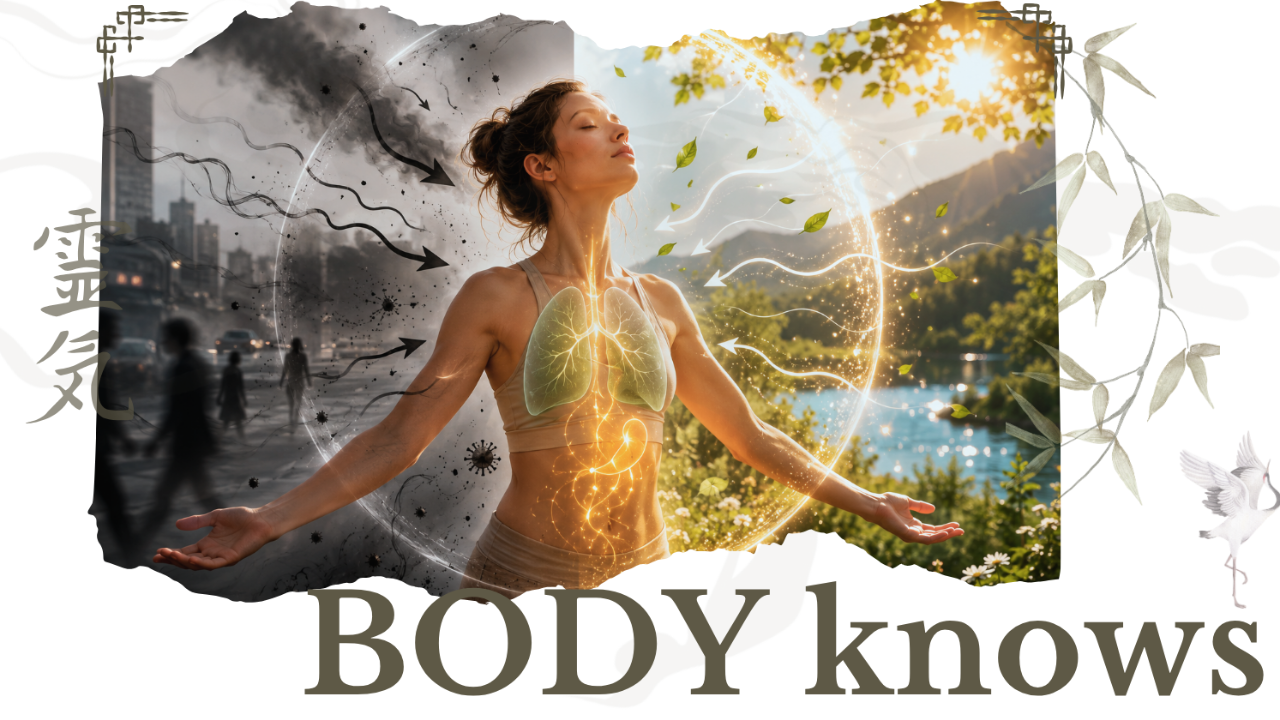
A Qi gong guide to stronger energy boundaries
"For years, I blindly trusted my mind instead of listening to my body."
If you had asked me a few years ago what it meant to be strong, I would have answered without hesitation:
Discipline.
Persistence.
Hard work.
One more workout.
For over 20 years, I taught movement, led training sessions, and believed that the body could handle anything, as long as we trained it properly.
And my body really did handle it all. Well, until one day, it couldn't anymore.
Today, I know my body didn't break down overnight. It had been sending me subtle warning signs all along.
Restlessness. Tension. Anxious thoughts. Excessive fear. That constant feeling of needing to stay alert, always on guard, always ready to go.
But I ignored every message my body was sending me.
I trusted my mind more than my body. I believed that my mind knew better than my body did, and that whatever my mind told me was the only right thing for my body.
Yes, I'm one of those people who only truly learn from their own mistakes.
The real turning point didn't come when I injured my Achilles tendon, or when it took me a year and a half to fully recover from COVID and get back to feeling like myself.
It came later.
When I finally understood that my body hadn't betrayed me. It had been trying to protect me.
Table of contents
1. When the body puts theory to the test
3. Three systems that support Wei Qi
4. Why I don't believe in energy bubbles
6. When can we expect to see changes?
1. When the body puts theory to the test
An armor built through willpower and the body's true biological defenses are worlds apart.
In training environments, you develop a clear understanding of anatomy. You think you know the laws that govern the human body. But there is an enormous difference between knowledge learned from books and wisdom shaped by life experience.
When injuries and prolonged illness forced me to slow down and rest, I lost my most important tool – action. The feeling of having control over my body simply disappeared.
First comes deep fear, then emotional distress, and eventually, there is no other choice but to start all over again. In a completely different way.
When you feel things deeply and are a highly empathetic person, all of this affects you on a profound level.
I began to distinguish between physical and psychological exhaustion. I realized that what I had always considered "strength" was not true stability.
It was merely compensation.
An armor I had built through sheer willpower, while underneath it, my body's true biological defenses were completely exhausted.
As someone who naturally seeks to understand how things work, I wanted to know what was happening.
I found answers at the intersection of two worlds: Traditional Chinese Medicine (TCM) describes a weakening of Wei Qi, while modern neurobiology explores the effects of a chronic stress response (fight or flight), in which the nervous system struggles to return to a state of regulation.
This led me to a crucial realization:
The body does not need more external strength. It needs to regain a sense of safety before it can begin restoring its natural boundaries.
And so I began exploring the methods and approaches that could help the body feel safe again.
2. What is WEI Qi?
The traditional Qi Gong perspective on protective Qi
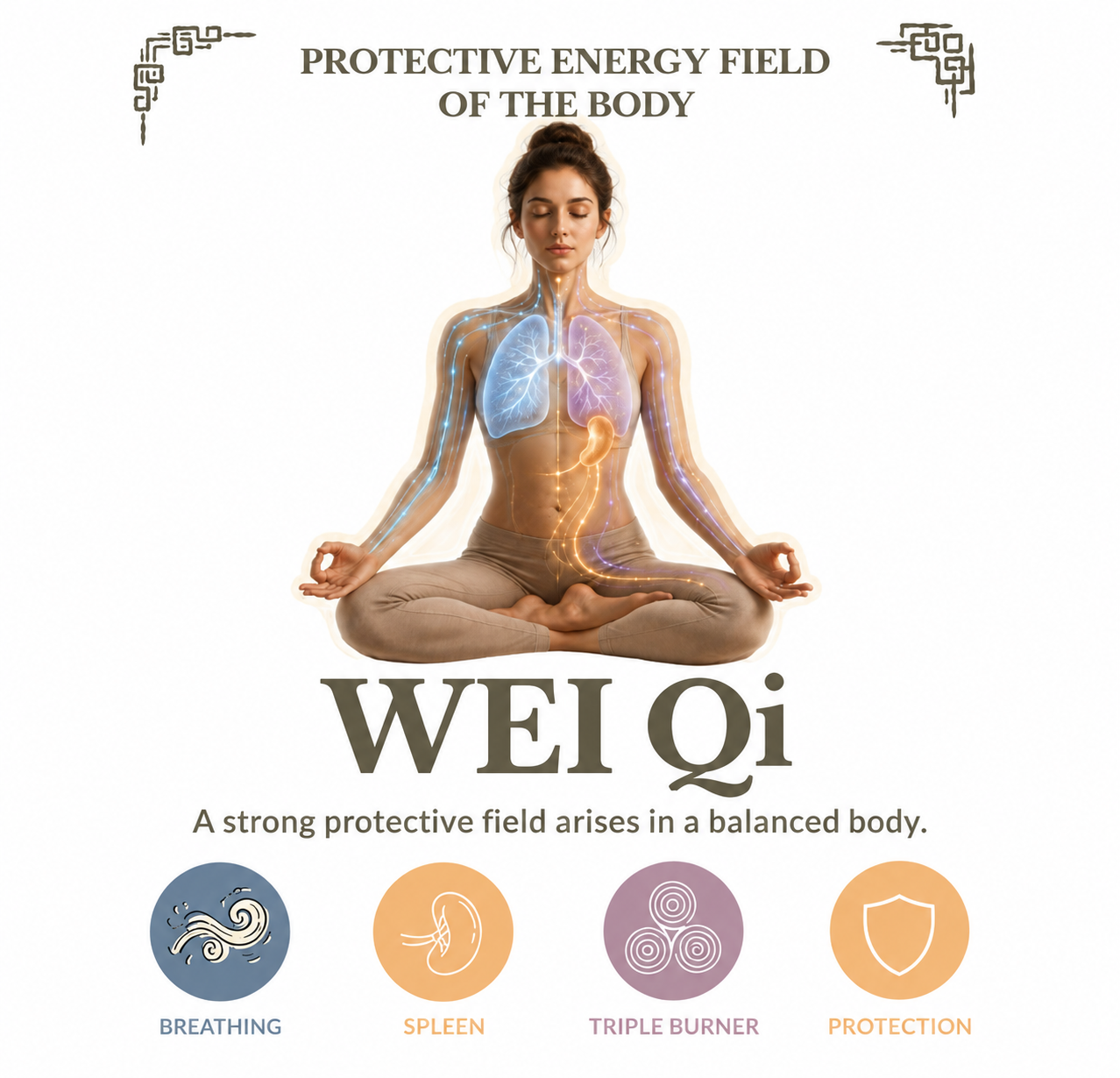
Wei Qi circulates just beneath the surface of the skin and supports the body's natural defenses.
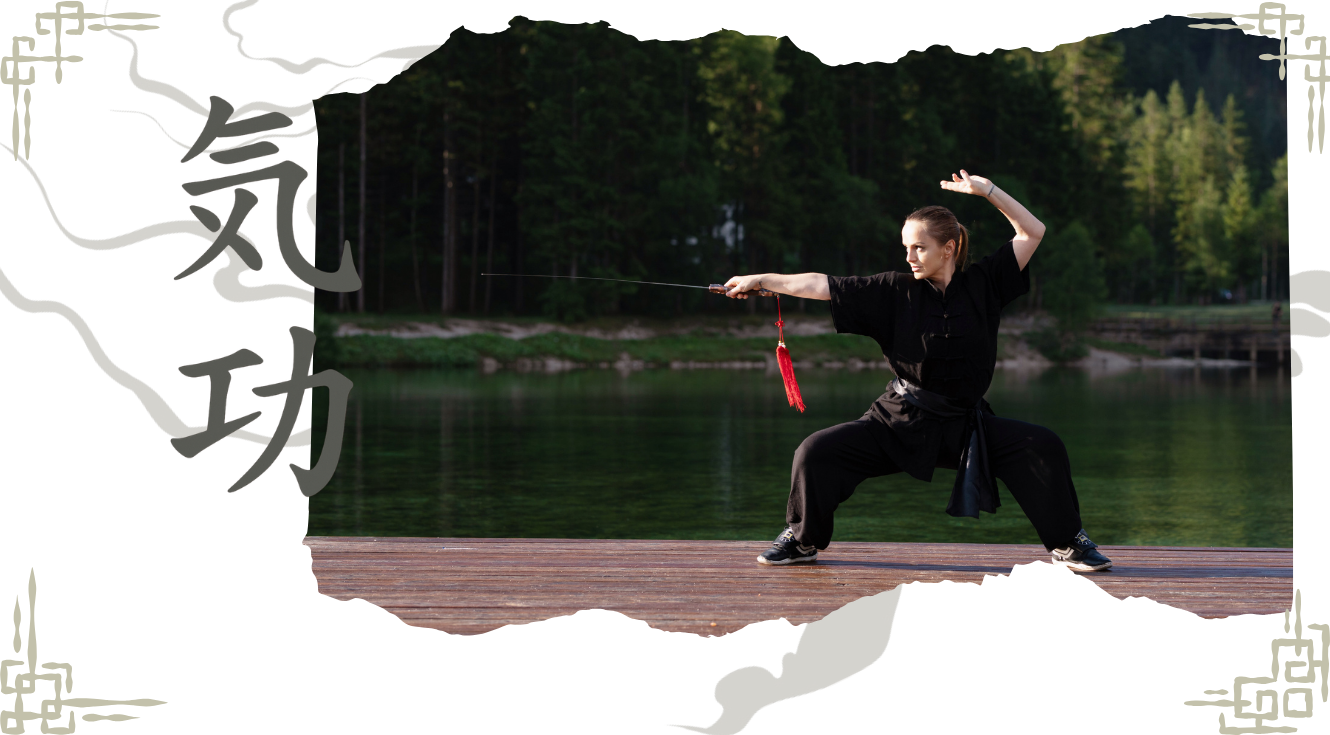
When I first started practicing Qi Gong, I was primarily interested in the structure of movement. For a long time, I didn't even fully understand what I was doing.
Then, gradually, different stages begin to unfold, one step at a time. Not when your mind decides you're ready, but when your body is ready.
This means that along the way, you also learn patience and trust in the process.
What fascinates me most is how your body begins to integrate, on its own, what Buddhism has been teaching for thousands of years.
The body needs months, often years of consistent practice, to gradually develop its internal architecture.
Some like to call this inner alchemy.
Personally, I still prefer to stay close to the physical. To what is tangible. And yes... today, after several years of practice, I can say that I genuinely feel Qi – life energy – within my body.
I can also sense its presence in the lower Dantian, where, according to traditional Qi Gong, Qi is stored, replenished, and cultivated.
The first noticeable signs of Qi may appear as very tangible sensations of warmth, tingling, and a deeper sense of presence within the body.
Only then did the concept of Wei Qi begin to truly make sense to me.
Not because I had read about it in a book. But because my body gradually began to confirm it through direct experience.
And if you don't experience these sensations yet, that's perfectly fine. For now, you might simply see this concept as an interesting starting point.
Something that may take on an entirely different meaning for you in the near future.
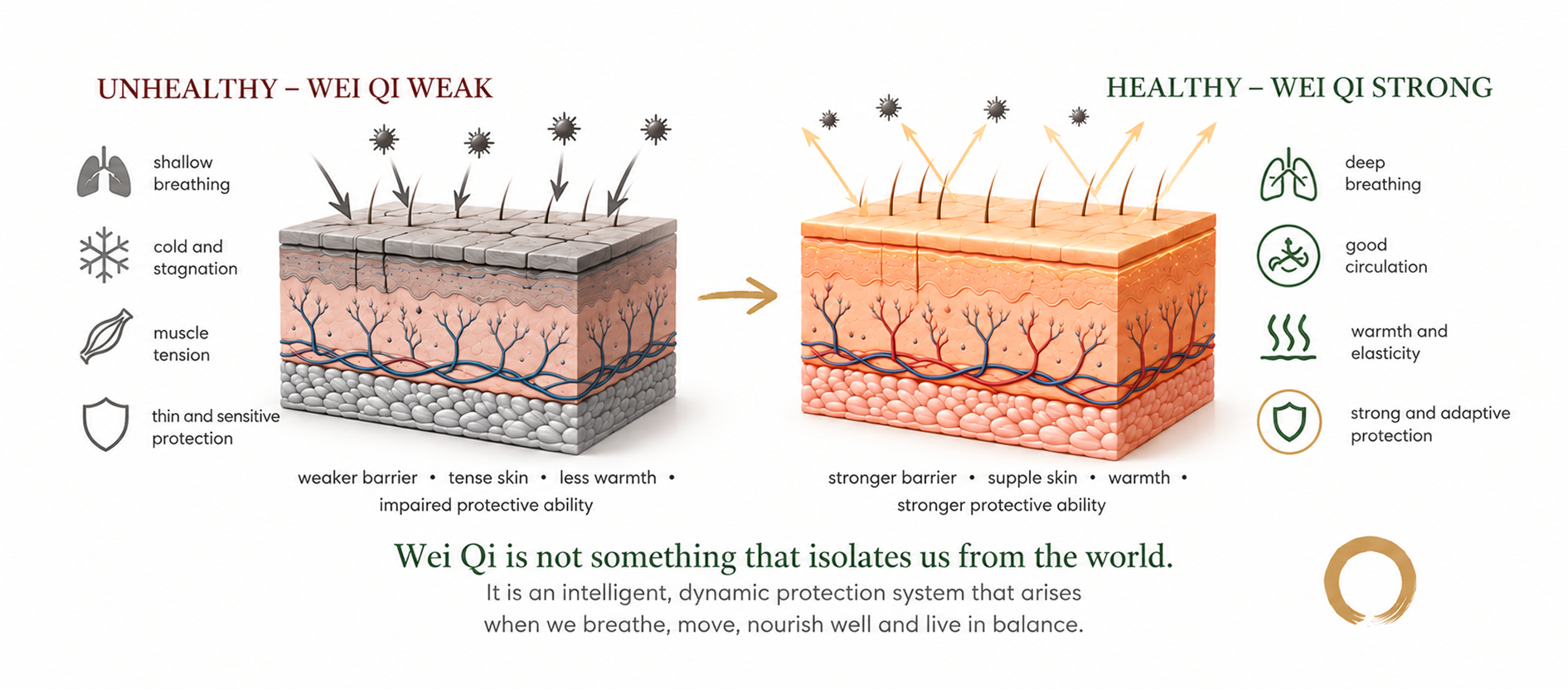
In Traditional Chinese Medicine (TCM), Wei Qi is considered our first line of defense. It does not circulate deep within the body, but just beneath the surface of the skin, in the space between the skin, muscles, and fascia.
Its functions are very practical:
-
Protects the body from external influences (cold, wind, and pathogens).
-
Regulates the opening and closing of the pores.
-
Contributes to the regulation of body temperature.
-
Helps maintain the boundary between the internal and external environments.
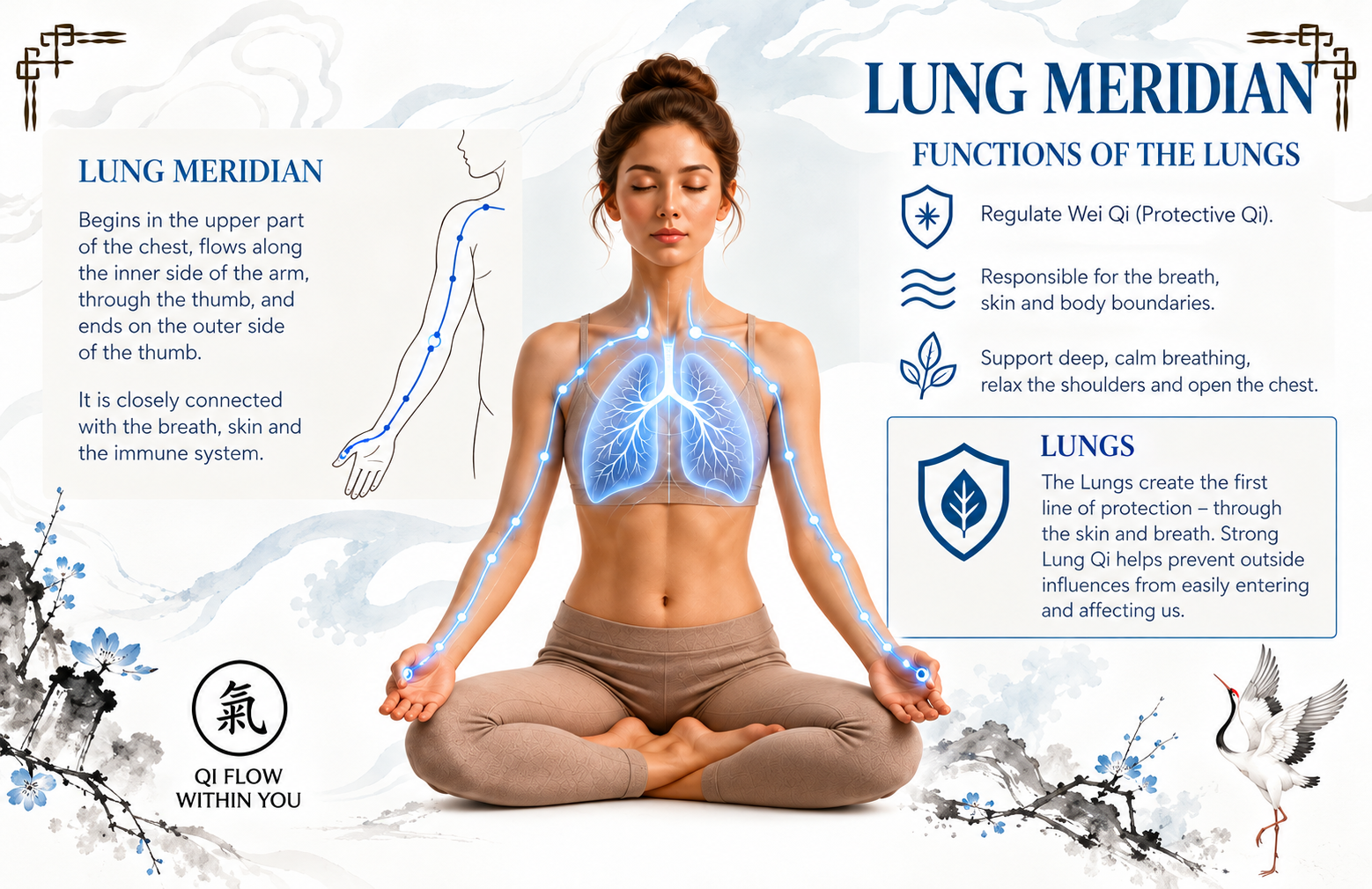
According to Traditional Chinese Medicine, the Lungs play a central role in Wei Qi, distributing it just beneath the surface of the skin.
When Lung function is weakened by prolonged stress or illness, Wei Qi may also become weakened.
3. Three systems that support Wei Qi
Our protective field is the result of close cooperation between multiple systems, beginning much deeper within the body than we might imagine.
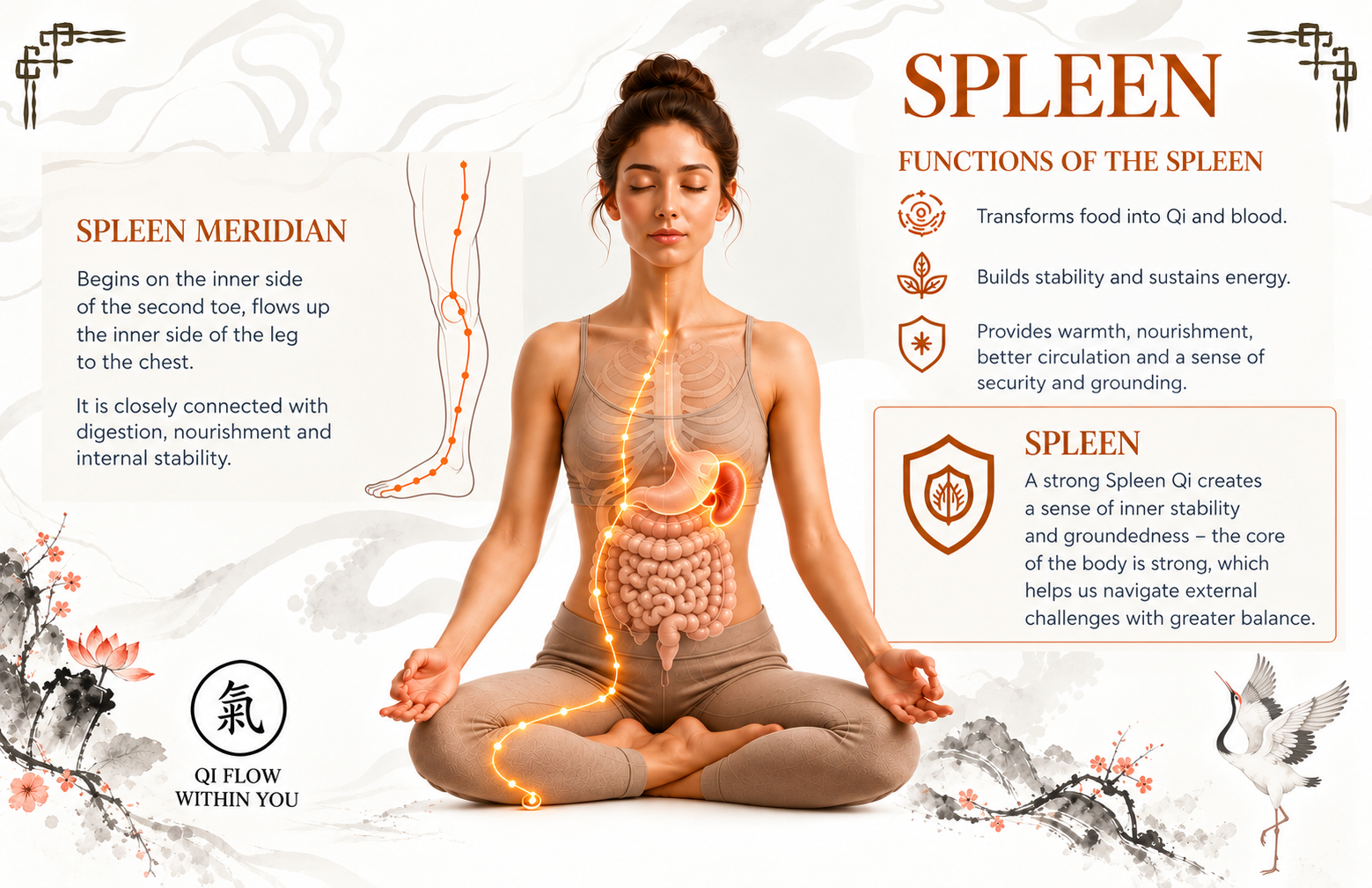
1. SPLEEN
In Traditional Chinese Medicine (TCM), everything begins here.
The Spleen produces Qi from the food and fluids we consume. It supports inner stability, a sense of solidity, and groundedness.
When the Spleen becomes depleted through constant worry and fatigue, the body loses its center.
Without it, we simply lack the essential resources needed to build our protective shield.
2. TRIPLE BURNER
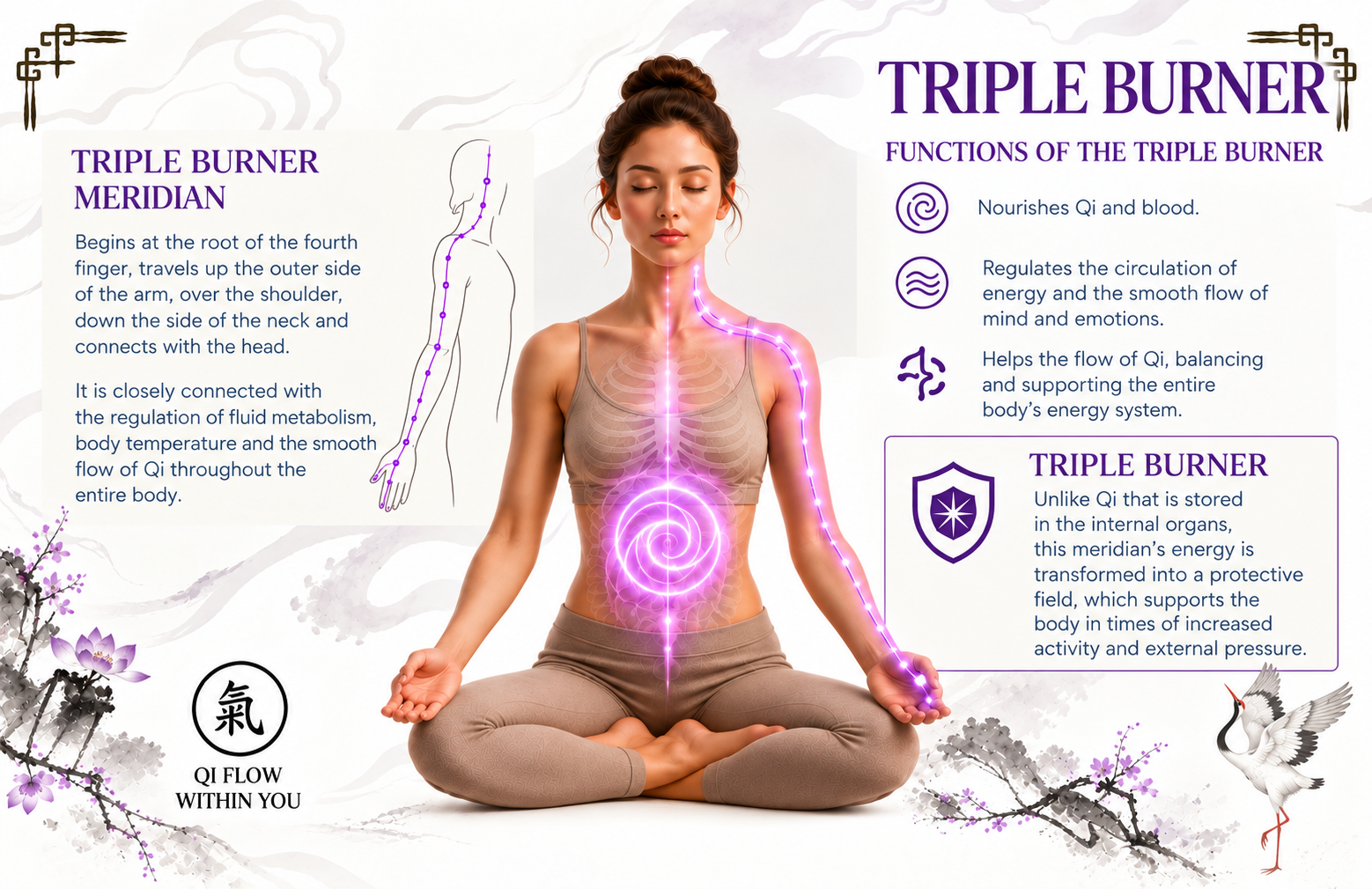
Triple Burner – the coordinator of energy flow: This system regulates the flow of energy and fluids throughout the body. Modern interpretations also explore its potential connection to the fascial system.
3. LUNGS
The Lungs – guardians of the body's natural boundaries: Only when we have a strong foundation – the Spleen – and clear pathways for energy flow – the Triple Burner – can the Lungs effectively distribute Wei Qi just beneath the surface of the skin.
Strong Lung Qi creates the first line of protection through every slow, calm breath.
4. Why I don't believe in energy bubbles
I tried, but my body simply didn't know how to respond.
I was often advised to imagine a protective bubble of light surrounding me.
But I couldn't feel any real change in my tissues or my breath.
My mind could create an image of an impenetrable shield, yet my nervous system underneath it remained just as tense.
Of course, some people may be more naturally connected to visualization and consciousness. For them, affirmations and visualization techniques might work better.
Others, however, experience life through movement.
The internal arts teach you that the true answer lies somewhere in the balance between the two.
The closer you move toward mastery, the less you search for one single right path.
Instead, you become increasingly aware of which path is right for you in each moment.
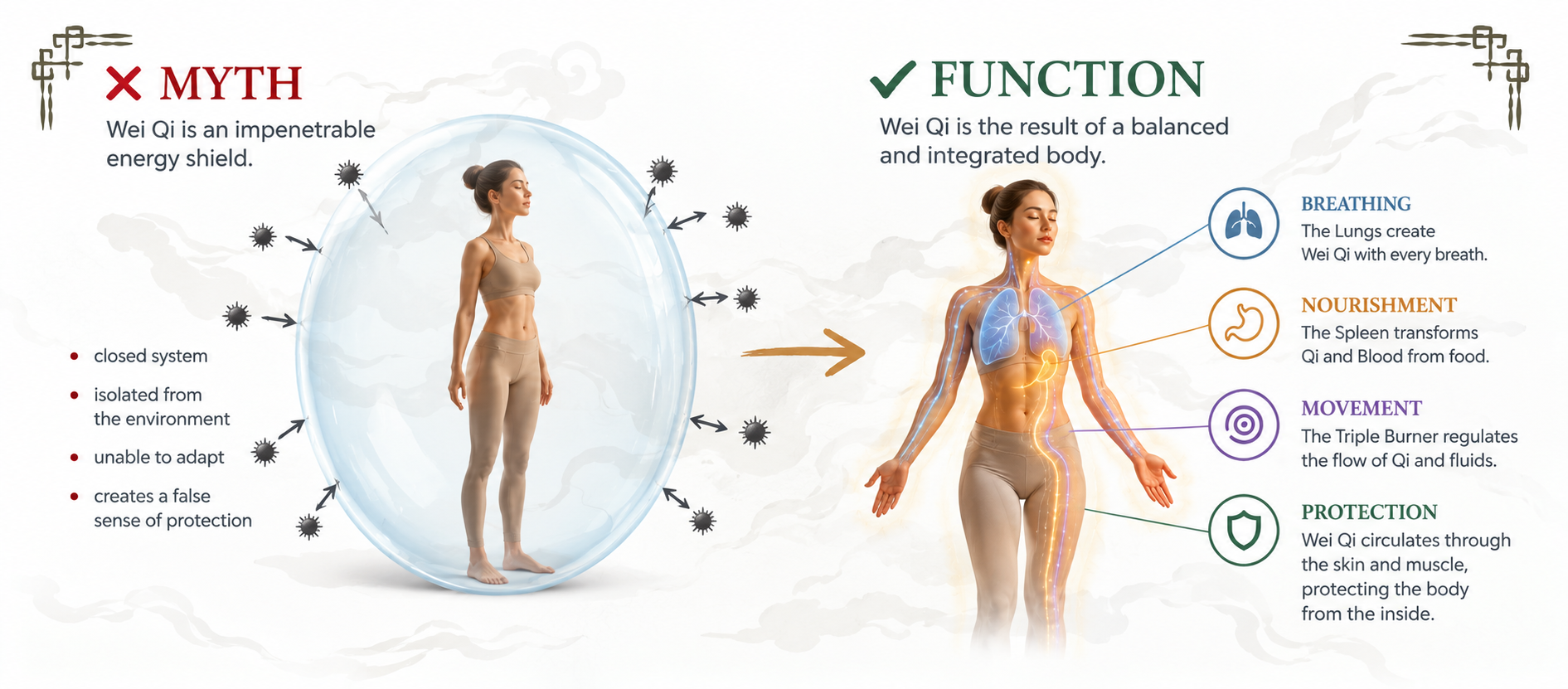
A genuine sense of safety begins within, through a deep sense of presence in your own body. The body doesn't need the visualization of a protective shield. It needs greater internal balance and regulation.
When we imagine ourselves inside a bubble, we may unconsciously create even more tension, pushing the world away from us.
But when we turn our attention toward our own internal structure, the nervous system can begin to settle.
Qi Gong always begins with the physical body. Then we move toward the energetic body, and only in the final stage do we explore consciousness, spirituality, and Shen.
5. Signs that Wei Qi is gradually becoming stronger
Building Wei Qi is not simply a technical exercise.
It is an experiment I genuinely enjoy exploring through my own body.
And beyond the practice itself, I observe whether the changes begin to appear in everyday life.
How does my body respond to stress in the evening?
At the end of a demanding day, will I once again turn to Netflix as a way to switch off, trying to force my system to calm down?
Or will I be able to genuinely release tension through my evening practice, allowing my body to feel safe enough to fall asleep naturally?
How does my nervous system respond to people who used to leave me feeling drained?
In moments of pressure, can I remain grounded enough within myself that I no longer react from a defensive state of anger?
The goal is not to become a rock, unaffected by everything around us.
The goal is to observe.
Anger, after all, can be an automatic biological defensive response that arises when our boundaries no longer feel safe.
6. When can we expect to see changes?
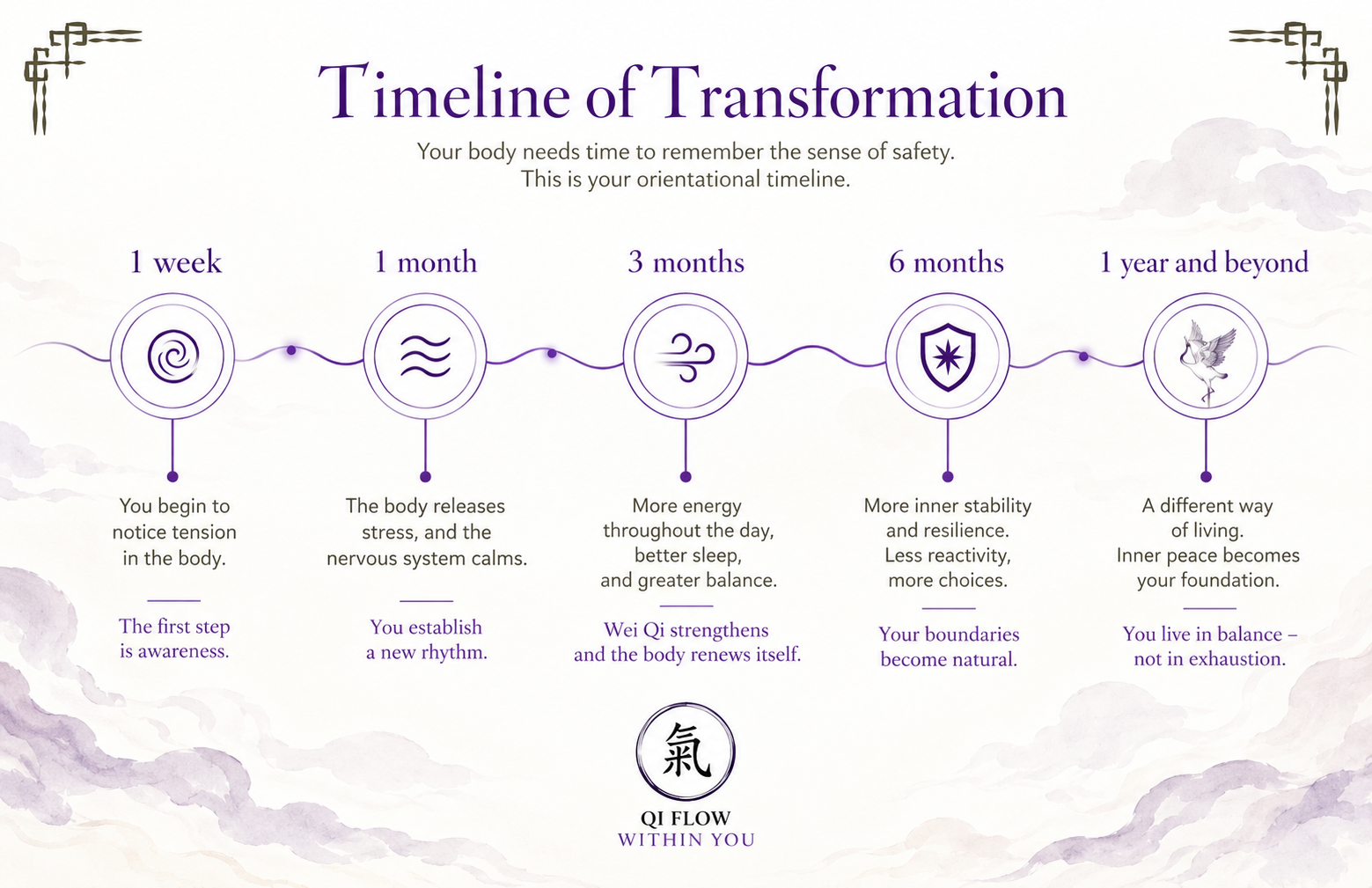
If I promised you that after just three days of Qi Gong, you would become immune to stress and that your life would be completely different from that moment on, I would be lying.
Our nervous system has a long memory. If we've spent decades living under stress, operating on autopilot, disconnected from our presence and awareness, and constantly following the demands of a rigid mind, it's only realistic that these patterns won't change overnight.
Building Wei Qi is a process. It is measured in months. Sometimes even years.
At first, you'll notice the smallest things:
-
You calm down more quickly.
-
You become aware of tension in your body sooner.
-
You find it easier to fall asleep at night.
-
Certain situations no longer throw you off balance so easily.
-
You don't always come home completely exhausted after spending time with people.
Perhaps it will only be a few months later, when you look back, that you realize your body has begun responding to life differently.
And perhaps that is the greatest change of all.
7. My perspective today
Today, I no longer search for the perfect energetic shield that would separate me from the world.
I'm far more interested in how the body can restore its natural ability to remain open, while staying stable enough not to lose its center when life becomes overwhelming.
This is precisely why I've spent the past few months developing my own Wei Qi Gong protocol. Not as a collection of techniques, but as a sequence of exercises through which I explore how movement, breath, and awareness can support the body's natural protective capacity.
So far, the changes I've noticed most in myself are better-quality sleep, a quicker return to calm after demanding days, and a growing sense that I can find my way back to myself more easily after stressful situations.
The exploration continues.
If you're curious about the complete Wei Qi Gong protocol and would like to practice with me, you can explore it in the Yin Yang Academy.
Coming up in the next blog...
If Wei Qi represents our first line of defense, what happens when that defense weakens and the body begins to respond with anger?
In my next blog, I'll explore the connection between the Liver, impulsivity, and traditional Qi Gong, and introduce my new practice protocol designed to support Liver Qi.
Sometimes, our greatest strength isn't found in suppressing anger.
It's found in understanding why the body created it in the first place.
